Aquaville Aquaponics

How Aquaponics Works

A natural, closed-loop ecosystem that grows fish and vegetables together — using up to 90% less water than conventional farming, with zero pesticides.

The Basics

One closed loop, two harvests

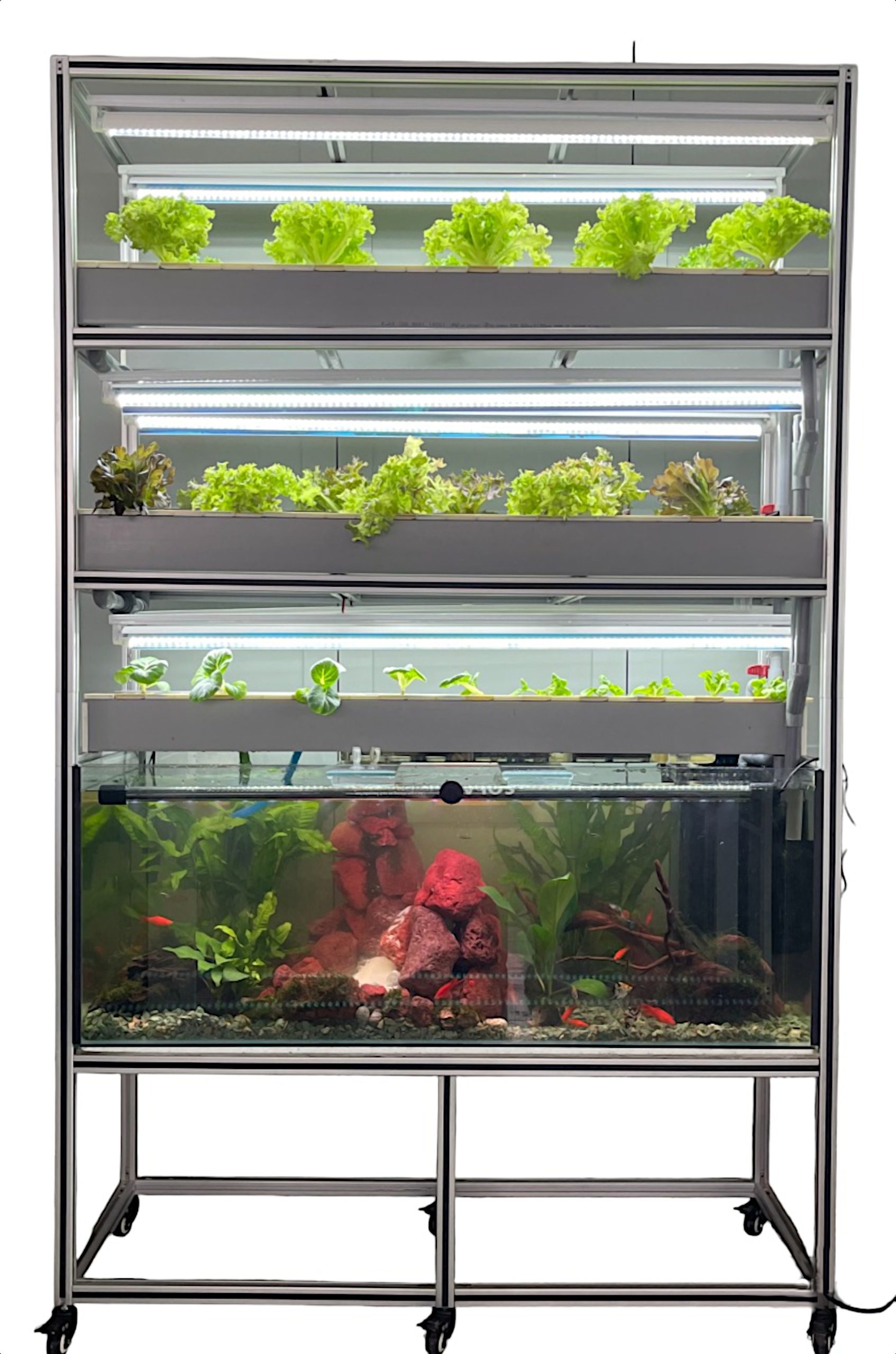
Aquaponics combines aquaculture (raising fish) with hydroponics (growing plants without soil) in a single re-circulating system.

1. Fish

Fish waste enriches the water with ammonia and nutrients.

2. Bacteria

Naturally occurring bacteria convert waste into nutrients plants can absorb.

3. Plants

Vegetable roots take up the nutrients, growing pesticide-free and fast.

4. Clean Water

The plants filter the water, which recirculates back to the fish tank.
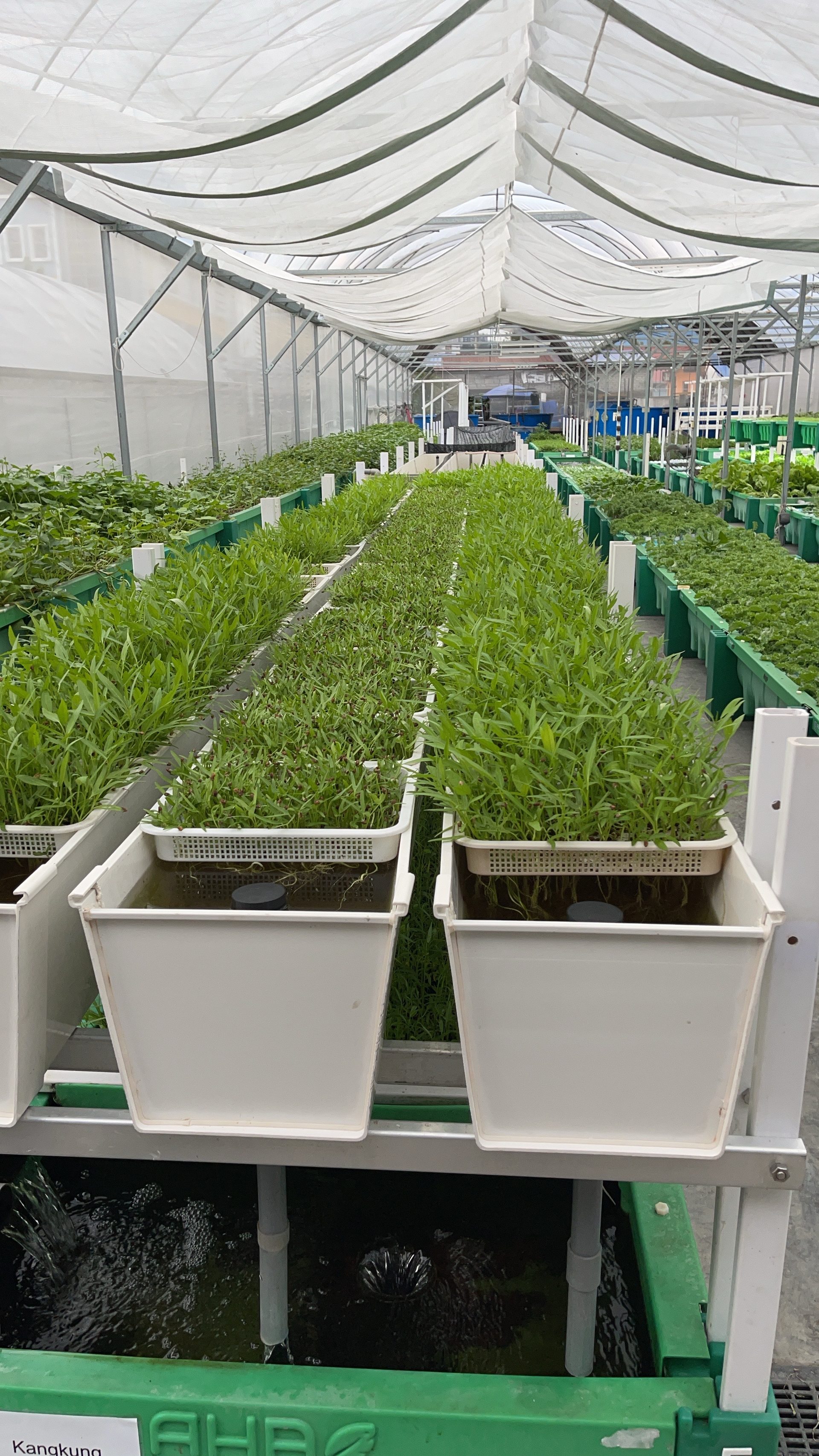
Vertical growing beds inside the Aquaville greenhouse
Why It's Different

Process & benefits of aquaponics

  • A natural ecosystem — 100% natural process
  • Pesticide-free, clean, nutritious and safe vegetables & fish
  • Year-round production, not limited by season
  • Water recycled within a closed system — up to 90% less water use
  • Environmentally friendly and sustainable food chain
  • Reduces carbon footprint and pollution versus conventional farming
Growing Methods

Planting methods we use on our farm

Deep Water Culture

Plant roots float directly in nutrient-rich water for fast, consistent growth — ideal for leafy greens.

DFT (Deep Flow Technique)

A shallow, steady flow of nutrient water moves through channel beds — reliable growth with efficient water use.

Wicking Bucket

Grow media draws water and nutrients up from a reservoir below — a low-maintenance system well suited to home and starter setups.

Vertical Tower

Plants stacked in a vertical column maximise yield per square foot — ideal for compact or urban sites.

Seeds We Use

Quality seed brands behind every harvest

We source from trusted seed brands to keep germination, yield and quality consistent across every planting cycle.

CropPower Rijk Zwaan Enza Seeds Baba Soon Huat Wellgrow
Farm Systems & Monitoring

Monitoring built into select systems

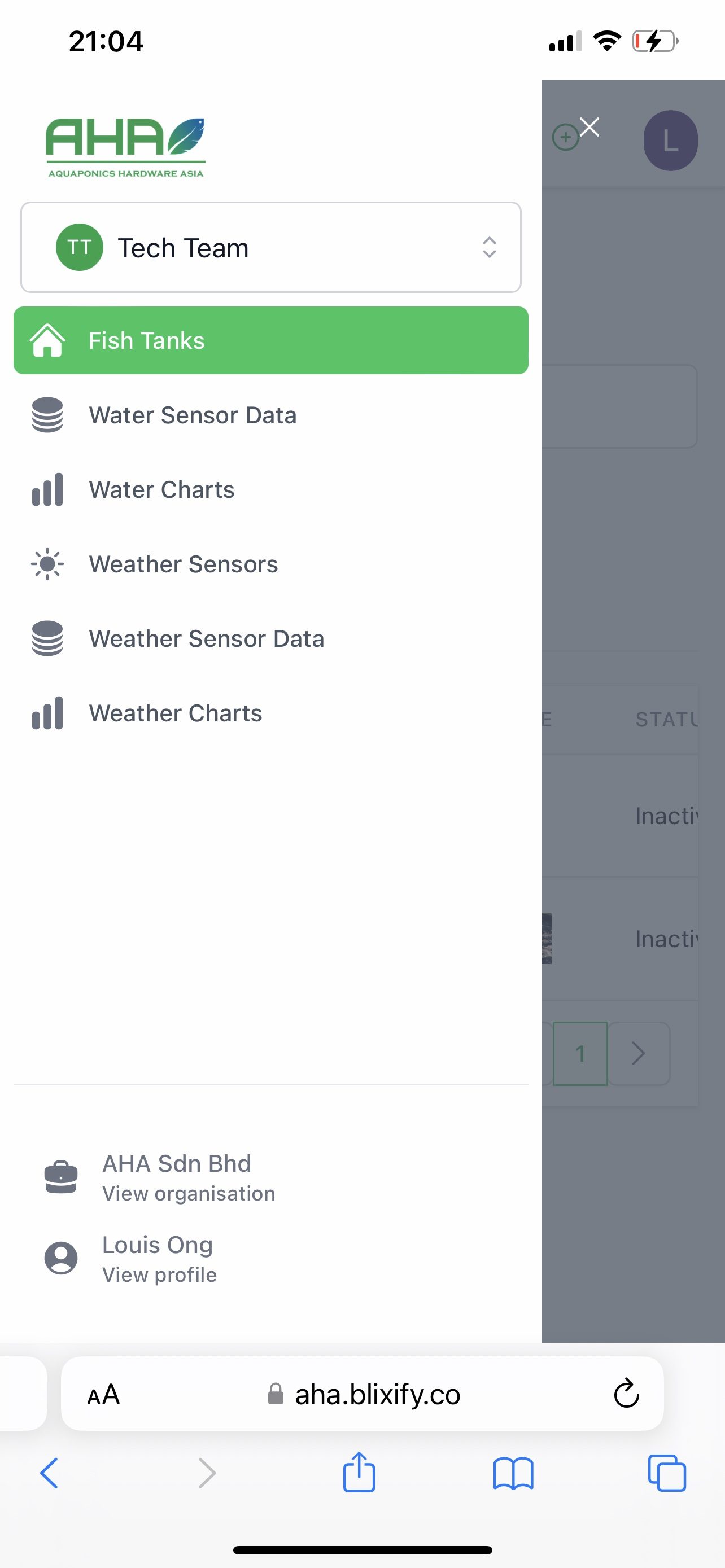
Selected systems include monitoring tools that track water quality, fish tank conditions and weather data — giving us (and our project partners) useful data to help farm more consistently at commercial scale.
  • Water & weather sensor data on key systems
  • Fish tank monitoring on selected modules
  • Historical charts for quality control & reporting
Farm monitoring dashboard showing fish tank and water data
Aquaponics vs. Conventional Farming

Why our clients choose aquaponics

Conventional Farming

  • High water usage, weather dependent
  • Relies on pesticides & chemical fertiliser
  • Fertiliser run-off pollutes waterways
  • Seasonal, land-intensive

Aquaville Aquaponics

  • Up to 90% less water, closed-loop recycling
  • Zero pesticides, zero chemical fertiliser
  • No harmful run-off — water stays in the system
  • Year-round, compact, scalable production

Curious how this could work on your site?

Whether it's a backyard system or a commercial farm, our team can walk you through it.